

In our increasingly automated world, sensors play a crucial role, enabling systems to perceive, interpret, and respond to their surroundings. Ranging across foods and beverages, pharmaceuticals, machinery manufacturing, and chemical processing industries, understanding sensor technology isn't just helpful; it’s essential.
Pushpa Automation is one of the most trustworthy Mumbai-based distributors and importers of quality industrial sensors and other automation products since 2020, with a complete range of sensor solutions designed to work close to absolute perfection. Their products are accurate, durable and adaptable to various industrial environments, which leaders in manufacturing rely on them.
A Sensors is an operational device that detects physical aspects of change like light, proximity, temperature or pressure and calculates this into an electrical output. These sensors serve as the sight and hearing of the industrial automation process, keeping a watch on the status on a real-time basis and making smart decisions. Sensors that monitor and measure certain parameters detect the information in automation and make the information available to control systems, where it can be processed to make decisions.
Pushpa Automation offers many varieties of sensors, such as photoelectric, proximity, capacitive, ultrasonic, optical fiber, and colour-mark sensors that are well catered to meet different requirements of detection. Implementing such sensors will streamline and create consistency in industries with accuracy and safety, as well as limit human interference to drive productivity.
These are aimed at giving homogeneous sensing distance in all metals, whether they are conductive or magnetic or not. Compared to conventional inductive sensors, Factor 1 models are peformance stable when inspecting aluminium.
Pushpa Automation’s advanced sensor solutions are designed for reliability in demanding environments, ensuring seamless integration into automated systems.
Automation systems rely on a variety of sensors, each of which is suited to specific applications. Here are the main types offered by Pushpa Automation:
By providing such a diverse range, Pushpa Automation ensures businesses get the right sensor for every operational challenge.
In modern automation and industrial ecosystems, sensors provide indispensable benefits:
Cross-Industrial solutions expertise in partnering with Pushpa Automation allow these sensor benefits to be realized in various industries like: packaging, pharmaceuticals, plastic, food & beverage, chemicals and so on.
Here are the real-life examples of the use of sensor technology that makes a difference:
Each application underscores why industrial operations depend on robust sensors. Pushpa Automation’s range equips industries to elevate performance with precision and dependability.
To choose the optimum sensor:
Pushpa Automation excels here: from expert guidance to matched solutions, leveraging their strong supplier network to precisely meet client needs.
Sensors form the backbone of modern automation, enabling smarter, safer, and more efficient industrial operations. Understanding how they work and their pivotal role underscores why companies like Pushpa Automation are key to shaping the future.
Need help choosing the right sensor?
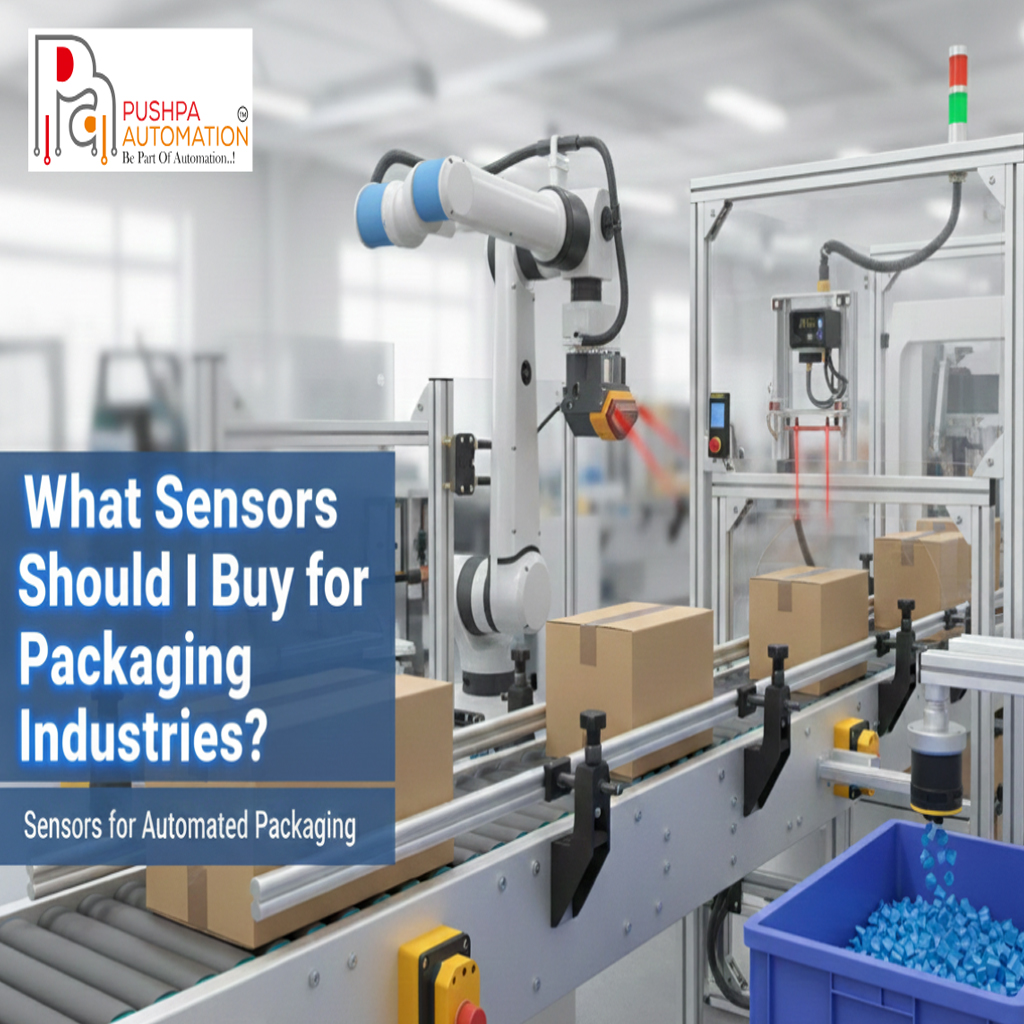 What
Are the Best Non-Ferrous Proximity Sensors for Detecting Aluminium?
What
Are the Best Non-Ferrous Proximity Sensors for Detecting Aluminium?
 What Are the Best Non-Ferrous Proximity Sensors for Detecting Aluminium?
 How Sensors Work and Their Importance in Today’s World
 Top Benefits of Using Encoders in Industrial Automation
 What Are Plastic Detection Sensors and How Do They Work?


 Download Brochure
 Home
Home